Guys and Dolls |
 | |
 |
| |
Guys and Dolls |
| |
|
| |
More than a year ago, Alma and I started to think about organizing an English-speaking theater group in Zug. Rarely, if ever, are there any plays performed in Zug in this language l community, and, although we are both amateur Thespians, we agreed it would be fun to put a play together. Soon thereafter we decided to stage 'Guys and Dolls'. We wanted to produce a musical, not only because we both enjoy them, but also because we felt this form of drama would attract a wider audience due to the music. 'Guys and Dolls' has interesting characters and excellent music, and it is very popular in the English-speaking theater yet not well-know on the Continent.
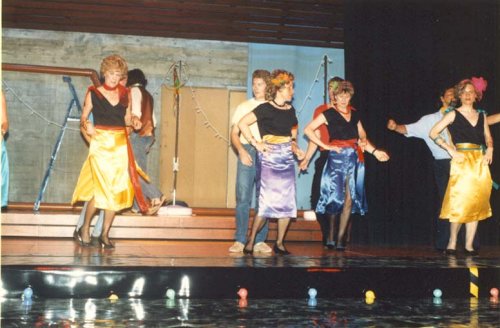
This idea not only stuck but continued to develop. Quite soon we formed a committee to aid us in realizing this ambition. After combing Zug for a theater, we settled on the Loreto, and last spring we met with the board of the Zug International Women's Club to seek their support. A flyer announcing our project was sent out at the end of May to see if we would find a sufficient number of people to participate. The response was far greater than we had anticipated, for approximately 70 people turned up at our first organizational meeting in June. Auditions were held soon thereafter, and before the beginning of the summer holidays all roles had been assigned. The cast consisted of people within or connected with the Women's Club as well as those totally outside it. In September our guys and dolls began rehearsing twice a week. An additional rehearsal per week was added after the Christmas holidays, not to mention the numerous Saturday morning and Sunday evening rehearsals of the dancers. As opening night drew nearer, rehearsals grew in number and intensity.
Of course there were many headaches and disappointments in organizing this production of 'Guys and Dolls'. but they were more than matched by times of elation and fun. We could not have possibly done all the work ourselves. Committees took over the work involved in making costumes, in training voices and dancers, in preparing music, lighting, sets and props, and in arranging finances. Obviously, despite the blessing of the Women's Club, we could have done nothing without the generous financial support of our patrons who had faith that our hopes and plans would result in an successful production. Incidentally, our production is totally not-for-profit; any funds earned in excess of expenses will be used to help finance future productions. Finally, we could not have brought this play to the stage without the royal support of the numerous amateur actors, actresses and dancers (over 50 in all) who sacrificed hours of their time to come to rehearsals and bite their tongues in frustration while submitting to our tyrannical instructions and tirades.
Peter H. Oehrlein